



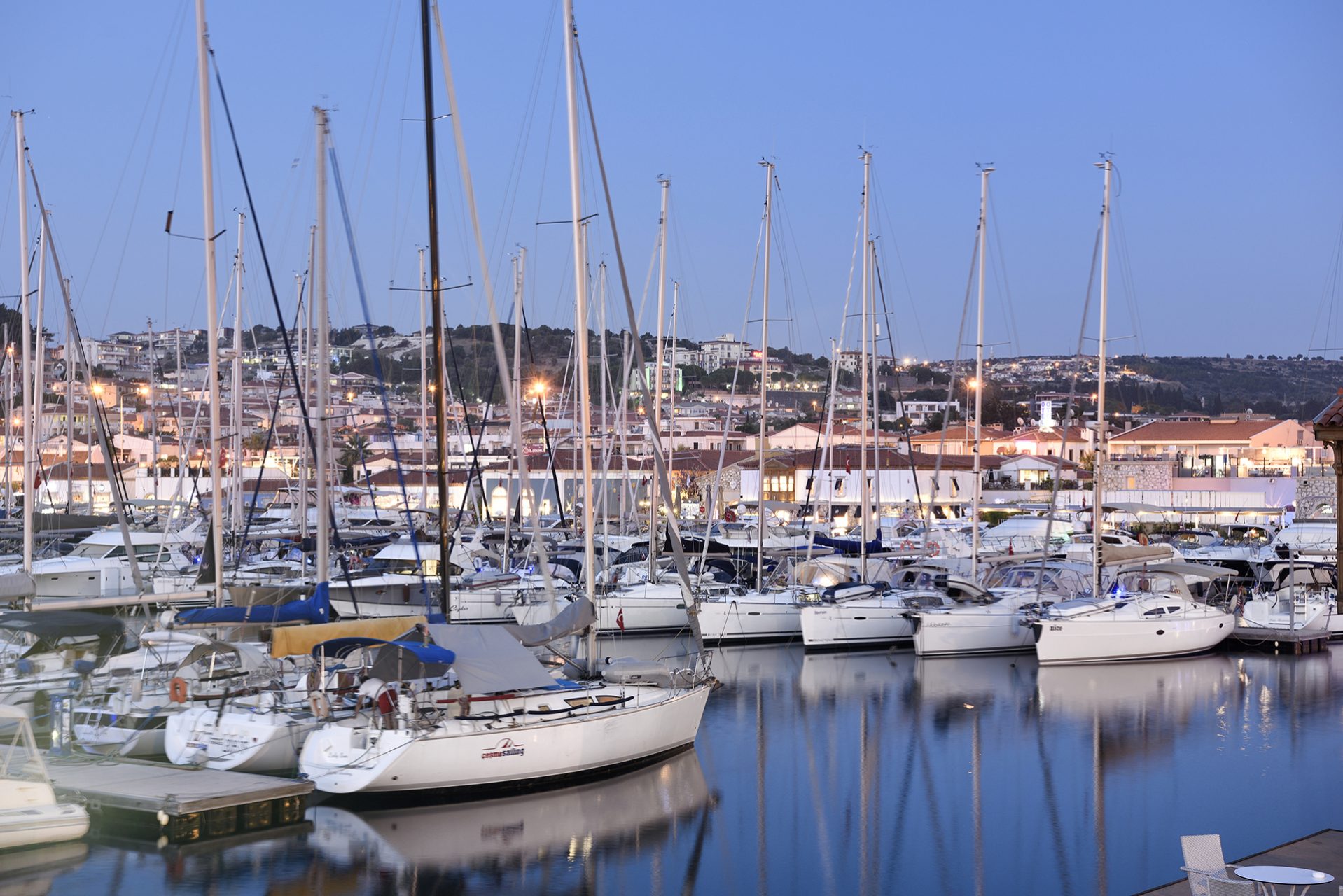
The Ministry of Environment and Urbanization has registered 61,868 vessels with blue cards to track their waste.
As in the rest of the world, marine pollution is rapidly increasing and becoming a widespread problem in Turkey. To combat this issue, take additional measures against ships polluting the sea, and prevent ship-related marine pollution, a circular was issued regarding the “Marine Waste Management Application.” This circular places ship waste under strict monitoring.
The circular updated the Ship Waste Tracking System and Blue Card System applications used for managing waste from ships, combining them into a single application called the “Maritime Waste Application (DAU),” thereby reducing bureaucracy.
Additionally, with the integration of applications, physical processes such as waste transfer form and blue card printing, along with the requirement for boat owners to carry a blue card, have been eliminated, and records have been transferred to a digital environment.
By ensuring that transactions are conducted digitally in an online environment and monitored in real time, the use of paper and plastic cards has also been eliminated.
The Ministry will monitor the entire process in real time.
Last year, 315,325 cubic meters of oil and oil-derived waste, 85,413 cubic meters of sewage, and 163,989 cubic meters of solid waste were collected from ships sailing in Turkish territorial waters and sent for disposal.
The entire process, from the delivery of ship waste and cargo residues to waste reception facilities or waste collection vessels to their disposal, is monitored in real time and online by the Ministry and authorized institutions and organizations through the “Maritime Waste Application.” This aims to prevent marine pollution that may be caused by ships.
The Blue Card System, which aims to track waste from small marine vessels such as yachts and boats that fall outside the scope of the MARPOL Convention, has been fully implemented online under the “Marine Waste Application.” Boat owners can now register for the system free of charge by visiting their nearest coastal facility.
Since the system was launched, 61,868 vessels have been registered with blue cards by coastal facilities such as marinas and fishing shelters, and waste collection vessels have been used to track their waste.
Those who fail to deliver their waste within 48 hours will be fined for environmental violations.
Bilge water, which is highly polluting, other petroleum derivatives, sink and toilet water, and all solid waste, including plastic, are covered by the circular. The circular also imposes restrictions on the delivery time for this waste.
Commercial, sporting, recreational, and fishing vessels that depart from the port and complete their activities on the same day, returning to the port, are required to dispose of their waste within 48 hours of their return to the port by using the Blue Card System, a waste reception facility, or a waste collection vessel.
Marine vessels that do not have equipment that produces waste other than waste engine oil are excluded from the scope of the circular. This aims to prevent the imposition of fines and the creation of hardship for marine vessels such as small fishing boats.
The amount of the administrative fine will increase as the size of the ship increases.
With the latest amendments to the Environmental Law, penalties have been significantly increased.
For example, a ship of 750 gross tons that discharges solid waste into the sea or discharges domestic wastewater despite having a blue card will be subject to an administrative fine of approximately 115,000 lira.
If the ship does not have a blue card, the penalty will be 137,109 lira. As the size of the ship, i.e., its gross tonnage, increases, the corresponding administrative fine will also increase.
Vessels, yachts, and similar marine craft that have not registered for a blue card will be subject to an administrative fine of 22,109 lira.





 English