


According to research by Sea Explorer, the Mediterranean Sea is the sea where climate change is felt most intensely. In Marmara, oxygen is depleting day by day due to intense human impact.
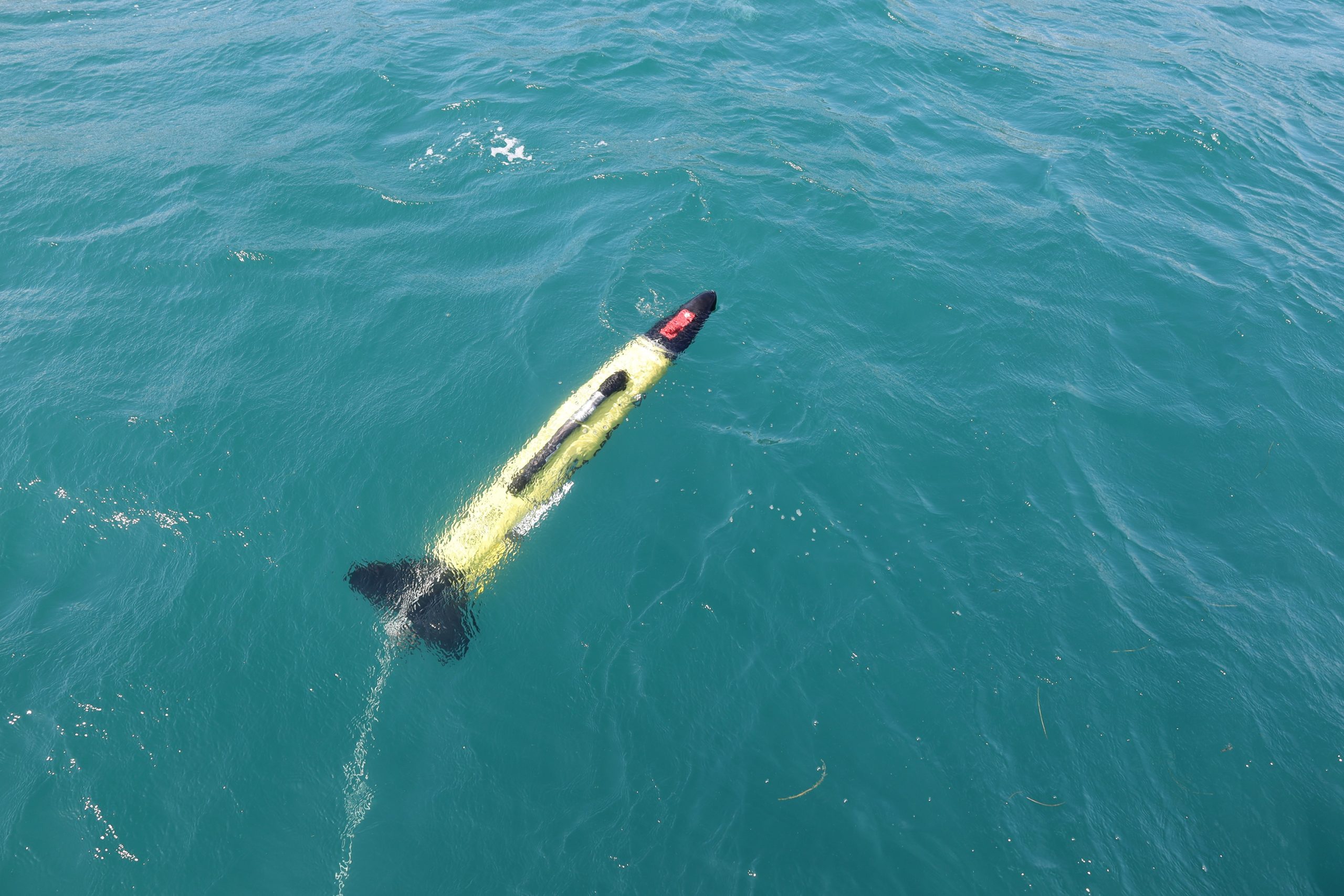
The Sea Explorer, an unmanned underwater glider provided by Türkiye İş Bankası for the use of METU Institute of Marine Sciences, has collected important data that will shed light on science. The data, which supports ecosystem and climate research in Marmara and the Mediterranean, revealed that the sea water temperature in the Eastern Mediterranean is above the world average. In Marmara, it is seen that the oxygen in the environment is rapidly depleting due to pollutants coming from domestic, industrial and agricultural areas.
Marmara is poor in oxygen
The most critical benefit that Sea Explorer offers to marine research is the collection of continuous, uninterrupted and high-resolution data in horizontal and vertical directions by scanning a wide area, thus capturing and detecting daily changes in the region. In the research, it was observed that oxygenated Mediterranean bottom water enters the southern region of Marmara where Bandırma and Edremit Bay are located. It was observed that this water loses its effect as it moves from west to east, and even in winter conditions, many regions towards the Gulf of Izmit remain oxygen-poor.
The results, which reveal the horizontal and vertical changes in such a large area in high resolution for the first time, point out that steps should be taken to prevent further negative impacts on living life in the Marmara Sea.
Discovery in the Black Sea waters
The first study launched by the unmanned underwater glider Deniz Kâşifi in the Black Sea continues. The Sea Explorer, which met our seas again within the scope of the research expedition carried out in the Black Sea with the support of METU's oceanographic research vessel Bilim-2 and the Marine Ecosystem and Climate Research Center (DEKOSİM) and the Horizon 2020 Bridge-BS Project, successfully advanced to the border of Turkey's exclusive economic zone in the Black Sea.
The data collected by the Sea Explorer, which will continue its mission in the Black Sea until the end of July, will be compared with the data collected during the offshore expedition. This comparison is expected to be the first comprehensive study on the Black Sea offshore oceanography and an important milestone in the field of marine research. The data to be collected will contribute to the development of science-based policies for the sustainable management of our seas by increasing the national marine research capacity.
Impact of intense human activity
Prof. Dr. Barış Salihoğlu, Director of METU Institute of Marine Sciences, stated that the Marmara Sea is an inland sea where intense human activities are experienced in addition to the negative changes in the climate.
Salihoğlu said that being surrounded by provinces that host one-fifth of Turkey's population and have a diversified economy ranging from agriculture to energy, tourism to industry, the human pressure on the Marmara Sea is increasing day by day.
Pointing out that the fact that water exchange with other seas is only through two narrow straits reduces Marmara's defense power against humans, Salihoğlu said: “Oceanographic data collected by METU Marine Sciences Institute for more than 40 years show that oxygen in the Marmara Sea, especially in deep basins and gulfs, has fallen below critical levels. This indicates that the negative effects on the living creatures living in the Marmara Sea will increase even more. Urgent measures need to be taken to prevent the Marmara Sea from becoming a dead sea without oxygen after a certain depth like the Black Sea. In the first place, it is of great importance to control and supervise human-induced domestic, industrial and agricultural pollutants rich in nutrient loads such as nitrogen, phosphorus, etc. carried to Marmara by basins and wastewaters.”.
“Temperature rise in the Mediterranean affects marine ecosystems”
Commenting on the findings in the Mediterranean, Salihoğlu stated that the effects of human-induced climate change such as warming, unexpected weather events and acidification of the seas are intensely experienced throughout the Mediterranean.
Prof. Salihoğlu pointed out that their research supports that seawater temperatures are above the world average in the Eastern Mediterranean, where these effects are felt the most, and said, “This temperature increase due to global warming has a negative effect on the change in the reproduction and feeding periods of marine organisms. In addition, the adaptation success of foreign species entering through the Suez Canal threatens the biodiversity of the region. This reveals that there will be significant changes in the marine ecosystem as a whole. The need for high-resolution data comes to the fore in detecting all these findings. At this point, Deniz Kâşifi continues to provide quality, uninterrupted and high-resolution data to both scientists and decision makers.”.
“Emphasis on ”common cause"
Celebrating its 100th anniversary, İzlem Erdem, Executive Vice President and Sustainability Leader at İşbank, emphasized that İşbank considers the basic principles that are identified with sustainability today as one of the main pillars of all its activities since its establishment:
“The problem of pollution in our seas, which play a major role in maintaining ecological balance, is a common issue for all of us. More than 90 percent of the habitable volume on Earth is located in the deep seas, and the creatures here support life on the entire planet. For this reason, we collaborate with experts and carry out many studies to protect and sustain the seas and marine resources. We are delighted to see that Deniz Kâşifi, one of these valuable studies, contributes to the marine research conducted by METU Institute of Marine Sciences, and we are happy to be able to support the creation of data for scientific solutions to climate problems.’





 English